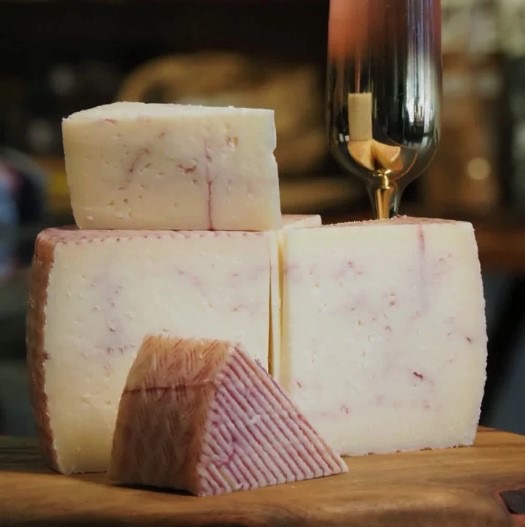
Cheese lovers often hear terms like "washed rind" and "bloomy rind," but what do they really mean, and how do they affect flavour, texture, and aroma? Let's break it down.
Bloomy Rind Cheeses
Bloomy rind cheeses are coated with a white, edible mold (usually Penicillium candidum) that gives them their soft, velvety exterior. Think Camembert-style or Brie-style cheeses.
- Appearance & Texture: White and fluffy on the outside, creamy and often buttery on the inside.
- Flavour: Mild, delicate, and approachable, sometimes with subtle earthy or mushroom notes as they age.
- Examples: La Bête à Séguin, Brie de Meaux, Riopelle, Délice the Bourgogne.
- How to Serve: Bring to room temperature for 20–30 minutes before serving to fully unlock the creamy texture and subtle flavours. Serve on a simple wooden board or ceramic plate with fresh bread, crackers, or fruit for a balanced presentation.
Bloomy rind cheeses are often the go-to for people new to artisan cheese, soft, comforting, and perfect for spreading on bread or crackers.
Washed Rind Cheeses
Washed rind cheeses, on the other hand, are periodically "washed" with a brine, wine, beer, or other liquids during aging. This encourages the growth of orange or reddish bacteria (Brevibacterium linens) on the surface.
- Appearance & Texture: Often orange or reddish, sometimes sticky to the touch. Interiors can range from soft and creamy to firm, depending on the cheese.
- Flavour: More pronounced than bloomy rinds — often savory, earthy, nutty, or slightly tangy. Some are quite bold and aromatic, making them a memorable centrepiece on any board.
- Examples: Taleggio, 14 Arpents, Chemin Brûlé, Gruyère AOP.
- How to Serve: Bring to room temperature for 30–45 minutes to allow the flavours to fully develop. Washed rind cheeses pair beautifully with rustic boards, nuts, charcuterie, or fruit preserves, which help balance their intensity and create a visually appealing spread.
Washed rind cheeses tend to have a stronger smell than their taste — don't be intimidated! Their aroma can be pungent, but the flavours are usually rich, creamy, and satisfying.
In Summary
- Bloomy Rind: soft, white mold, mild and creamy, approachable.
- Washed Rind: washed with liquid, orange/reddish rind, more aromatic, savory, and complex.
Both styles bring something special to the table, from a delicate, buttery wedge to a bold, flavourful centrepiece. The next time you're building a board, try combining the two: a bloomy cheese for creaminess, a washed rind for depth, and maybe even a nutty aged cheese to round it out. Your taste buds will thank you.