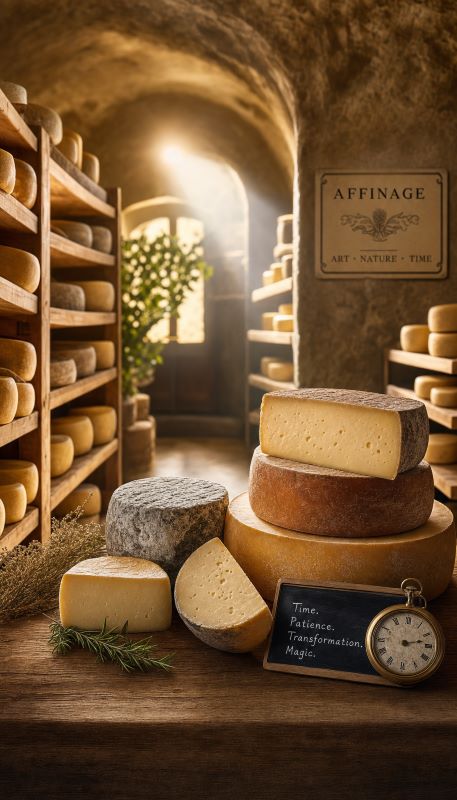
While most cheese shops proudly display their wares in refrigerated cases, the real magic happens in spaces most customers will never see: the cheese cave.
These carefully controlled environments are where cheese transforms from simple curds into the complex, flavor-packed treasures we love. It's a process that can't be rushed, and it's guided by the skilled hands of affineurs, the cheese world's most patient artists.
What Exactly Is a Cheese Cave?
A cheese cave isn't always an actual cave, though many traditional European producers still use natural limestone caverns. Modern cheese caves are temperature and humidity-controlled rooms designed to mimic those ancient conditions. Think of them as finishing schools for cheese, where young wheels learn to develop their full potential.
The environment inside varies depending on what's aging. Bloomy-rind cheeses like Brie need relatively warm temperatures (around 10–13°C) and high humidity to develop their signature white coats. Washed-rind cheeses require regular baths in brine, beer, or wine, which encourages the growth of beneficial bacteria that create those pungent, sticky orange rinds. Hard aged cheeses like Comté or Parmigiano-Reggiano prefer cooler, drier conditions and can spend months or even years slowly concentrating their flavors.
The Daily Rituals of Affinage
Affinage is the French term for the art of aging cheese, and it's far more hands-on than you might imagine. Affineurs don't just stack cheese wheels and walk away. They're in constant dialogue with their charges.
Turning is one of the most important tasks. Wheels are flipped regularly to ensure even moisture distribution and prevent one side from developing differently than the other. Some cheeses are turned daily, others weekly, depending on their size and style.
Washing and brushing keeps rinds healthy and encourages the right kind of microbial growth. A washed-rind cheese might be bathed in salt water every few days, while a natural-rind tomme gets brushed to remove unwanted molds and develop its rustic coat.
Monitoring means checking temperature, humidity, and the cheese itself. Affineurs tap wheels to listen for hollow spots that might indicate unwanted gas pockets. They examine rinds for cracks or discoloration. They even smell the aging rooms to detect any off-notes before they become problems.
This level of attention is what separates truly artisan cheese from mass-produced alternatives. It's craftsmanship in its purest form.
How Caves Shape Flavor
The conditions inside a cheese cave directly influence what you taste. Temperature affects the speed of enzymatic activity. Warmer caves accelerate aging, while cooler ones slow it down, allowing for more nuanced flavor development.
Humidity determines texture. Too dry, and cheese loses moisture too quickly, becoming hard and crumbly before its flavors have matured. Too moist, and unwanted molds can take over, or the paste becomes overly soft and ammonia-scented.
Air circulation is the unsung hero. Gentle airflow prevents stagnant pockets where bad bacteria might flourish, while also helping rinds dry appropriately between washings.
The microbial environment itself plays a role. Every cheese cave develops its own unique population of yeasts, molds, and bacteria. These invisible residents colonize cheese rinds and contribute to regional flavor characteristics. It's why a Camembert made in Normandy tastes different from one made elsewhere, even if the recipe is identical.
The Seasons Matter Too
Traditional cheesemaking follows the rhythm of the seasons, and caves reflect this. Spring milk, rich with the flavors of fresh grass, produces cheeses that age differently than winter milk from hay-fed animals. Skilled affineurs adjust cave conditions throughout the year to account for these variations.
Some producers even rotate their inventory through different caves as cheeses mature, moving them from warmer, more humid environments in youth to cooler, drier ones as they age. It's like a carefully choreographed dance, with each step designed to coax out the best possible flavor.
Why This Matters to You
Understanding affinage helps you appreciate why artisan cheeses cost more than their industrial counterparts. You're not just paying for milk and time. You're paying for expertise, attention, and the risks inherent in a process that can't be automated.
When you buy a properly aged cheese, you're getting the result of daily care, years of knowledge, and conditions that were monitored and adjusted dozens or even hundreds of times. You're tasting the cave itself, the hands that tended it, and the patience that allowed transformation to happen naturally.
Experience the Difference
Next time you visit us at Farmhouse, ask about the aging process behind your favorite cheese. We love sharing producer stories and explaining how different caves create different results. Try comparing a young cheese with an aged version of the same variety. Notice how time and careful attention unlock layers of complexity.
The cheese cave remains largely invisible to most of us, but its influence is profound. It's where science meets art, where patience becomes flavor, and where the simple act of waiting transforms good cheese into something truly extraordinary.
What's aging in your fridge right now? Come visit us and discover cheeses at their perfect moment of maturity, ready to grace your table with all the magic that time and expertise can create.